Congratulations on taking a major step toward restoring your healthy, confident smile. Dental implants offer a permanent, secure solution for missing teeth. However, the success of your new smile heavily depends on what happens after you leave the dental chair.
Proper aftercare ensures your mouth heals quickly and minimizes the risk of complications. At Dyer Dental Care, we want you to feel completely comfortable and informed during every stage of your recovery.
We created this guide to walk you through exactly what to do—and what to avoid—following your implant placement. Read on to discover how to manage your symptoms, keep the surgical site clean, and protect your brand-new implant.

The First 24 Hours: Crucial Steps for Healing
The first day of your recovery sets the tone for the rest of your healing process. Right after surgery, your body forms a blood clot over the surgical area. This clot protects the site and promotes healing, so you must treat it with care.
For the remainder of the day, avoid doing anything that creates suction or pressure in your mouth. Do not use a drinking straw; simply drink straight from a cup. You must also avoid spitting. If you need to clear your mouth, gently use a tissue to wipe your lips or swallow your saliva.
Keep your fingers and tongue far away from the surgical area. Poking the site can dislodge the blood clot and cause unnecessary bleeding. Finally, do not smoke. Smoking dramatically increases your risk of infection and slows down the healing process.
Managing Bleeding and Swelling
It is entirely normal to experience some minor bleeding after your dental implant surgery. This bleeding usually subsides quickly and stops within an hour or two. You might notice a little oozing for several hours, which is standard.
To control the bleeding, keep a piece of clean gauze on the surgical area. Apply firm, steady biting pressure for 30 to 45 minutes. If the bleeding continues heavily after applying pressure, please call our office.
Most patients will also experience some swelling in the mouth or face. Swelling varies from person to person and often increases during the first 24 to 48 hours before it starts to fade. You might also notice some bruising on your face. This is a normal part of the body’s healing response and will resolve in a few days.
What to Eat After Implant Surgery
You can eat as soon as the local anesthetic wears off, but you need to choose your meals carefully. Start with a soft diet of non-abrasive foods. Mashed potatoes, pasta, cottage cheese, warm soup, and scrambled eggs are excellent choices.
You can resume a regular diet as soon as you feel up to it. However, you must avoid chewing directly on the implant sites. Chew your food carefully on the opposite side of your mouth to protect the healing tissue.
Keeping Your Mouth Clean
Proper oral hygiene prevents infection, but you must be gentle. Do not rinse your mouth on the day of your surgery. Starting the day after your procedure, you can begin rinsing very gently with warm salt water. Dissolve one teaspoon of salt into eight ounces of warm water, swish softly, and let the liquid fall out of your mouth into the sink.
You can continue brushing your other teeth as usual. Just be extremely careful when brushing near the surgical sites so you do not irritate the gums or bump the implant.
Sutures and Bone Grafts
Unless your surgeon tells you otherwise, the sutures we use are dissolvable. They will fall out on their own, usually within four to ten days.
If your surgeon placed bone graft material along with your implant, you might notice some small, gritty particles in your mouth. This is completely normal and should stop within a day or two.
Understanding Your Medications
You likely received one or more prescriptions following your procedure. Take all medications exactly as directed on the bottle.
If we prescribed antibiotics, you must take them until the bottle is completely empty to prevent infection. Do not stop halfway through the course, even if you feel fine.
For pain management, you may need to take prescription pain medication every four to six hours for the first day. Keep in mind that narcotic pain medications cause drowsiness. Do not drive, swim, operate machinery, or drink alcohol while taking them. As your discomfort fades, you can wean yourself off the prescription medication and switch to over-the-counter options like acetaminophen or ibuprofen, as directed by your surgeon.
Resuming Normal Activity
Rest is vital during the early stages of recovery. Once you are no longer taking narcotic pain medication and feel up to it, you can begin resuming your normal activities.
Go easy at first. Ease back into exercise and recreation, slowly increasing your activity level over several days until you return to your normal routine.
The Road to Your New Crown
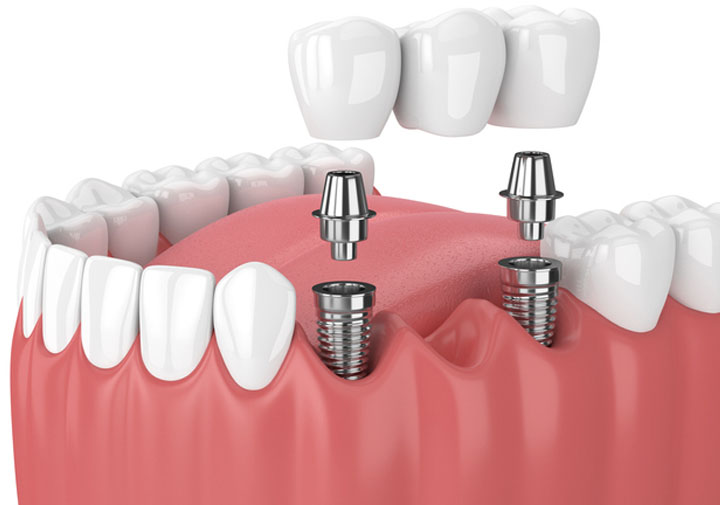
Right now, your jawbone is fusing with the titanium implant through a process called osseointegration. This creates a solid foundation for your future tooth. Depending on your specific case, the implant might be buried under your gums, or a small healing cap might be visible.
The length of time needed for the bone to heal varies for every patient. Once the site fully heals and the implant achieves maximum stability, you will return to have your permanent, custom crown attached.
We Are Here to Help
Please follow these instructions closely to ensure a quick and comfortable recovery. Your health and peace of mind are our top priorities at Dyer Dental Care.
If you have questions about your treatment plan, experience severe nausea, or notice swelling that worsens after a few days, please reach out to us. Call Dyer Dental Care during normal business hours to speak with our team or schedule a follow-up appointment. If you need assistance after hours, leave a message, and we will get back to you as soon as possible.