You have just completed a professional UV-activated teeth whitening treatment, and your smile is likely looking brighter and more radiant than it has in years. Now that you have achieved these results, the most critical phase begins: protecting them. The next 48 hours are essential for ensuring that your new shade sets properly and lasts as long as possible.
At Dyer Dental Care, we want to help you maintain that sparkle. Your teeth are currently in a unique state following the procedure, and a few simple adjustments to your routine over the next couple of days will make a significant difference. This guide outlines everything you need to know about post-operative care and how to keep your smile looking its best.
Why the First 48 Hours Matter
During a professional whitening treatment, the whitening agents penetrate the enamel of your teeth to oxidize and lift deep-set stains. To do this effectively, the microscopic pores in your enamel temporarily open up. While this is great for removing discoloration, it also leaves your teeth somewhat dehydrated and highly absorbent immediately after the procedure.
Think of your teeth like a clean, dry sponge during this window. They are ready to soak up any moisture and pigment they come into contact with. This is why strict adherence to specific dietary and lifestyle guidelines for the first two days is so important.
The “White Diet”: What to Eat and What to Avoid
To prevent immediate re-staining, we recommend following a “White Diet” for the next 48 hours. A good rule of thumb is to avoid anything that would leave a permanent stain on a white t-shirt.
Foods and Drinks to Avoid
For the next two days, please steer clear of dark or strongly colored foods and beverages. These are the primary culprits for reversing whitening results:
- Dark Beverages: Coffee, black tea, red wine, colas, and dark fruit juices (like grape or cranberry) should be avoided entirely.
- Staining Sauces: Tomato sauce, soy sauce, balsamic vinegar, barbecue sauce, and heavy curries can quickly discolor porous enamel.
- Pigmented Produce: Berries (blueberries, blackberries, raspberries), beets, and cherries contain strong natural dyes.
- Other Items: Dark chocolate and artificially colored candies or popsicles.
Safe Foods to Enjoy
You still have plenty of delicious options! Stick to light-colored or “white” foods that won’t compromise your smile:
- Proteins: Skinless chicken breast, turkey, white fish, and tofu are excellent choices.
- Grains and Carbs: White rice, pasta (with white cream sauce or olive oil), white bread, and mashed potatoes.
- Dairy: Plain yogurt, milk, and white cheeses (like mozzarella or swiss).
- Vegetables: Cauliflower, white onions, and parsnips.
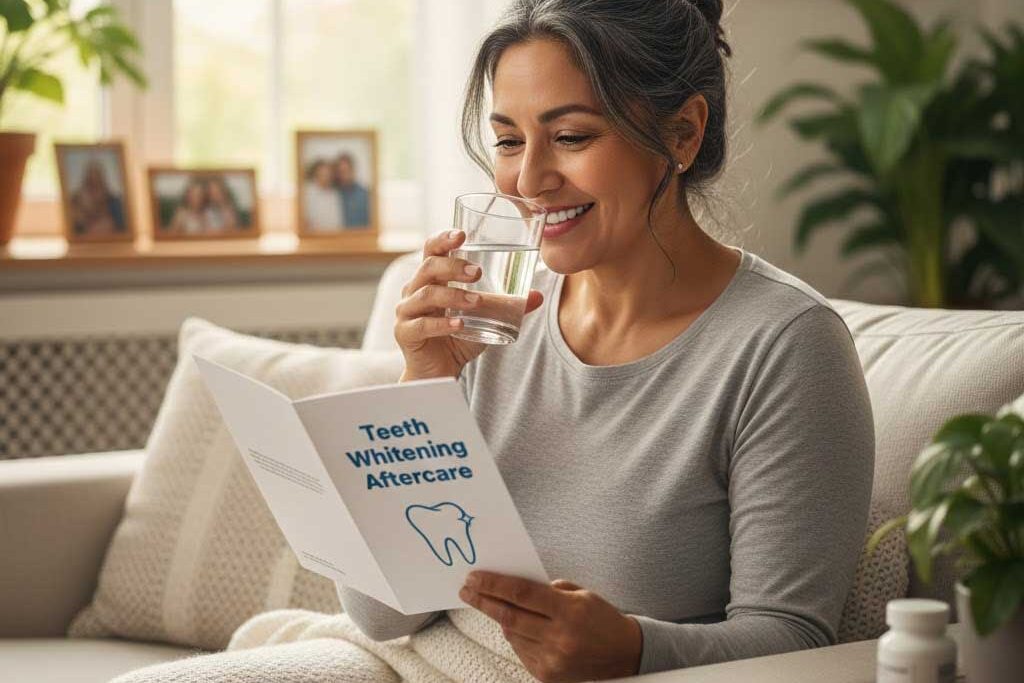
- Beverages: Water is your best friend right now. Clear sodas or sparkling water are also safe alternatives.
Lifestyle Adjustments for Optimal Results
Diet isn’t the only factor that influences your results. Certain habits need to be paused to protect your enamel while it rehydrates and closes up.
Pause Tobacco Use
If you smoke or use tobacco products, it is vital to stop for at least 48 hours. Nicotine and tar are notoriously strong staining agents. Because your enamel pores are open, smoking during this recovery window can cause rapid yellowing or browning, essentially undoing the benefits of your treatment.
Oral Hygiene and Handling Sensitivity
It is not unusual to experience some degree of tooth sensitivity following a UV-activated whitening session. You might notice short, sharp sensations or a dull ache, particularly when breathing in cold air or drinking beverages. This happens because the nerves inside the tooth are temporarily stimulated.
Managing Discomfort
While this sensitivity is typically temporary and resolves within 24 to 48 hours, you can manage it with these tips:
- Watch the Temperature: Avoid extremely hot or ice-cold foods and drinks. Stick to room-temperature items to reduce shock to the teeth.
- Switch Toothpaste: Use a desensitizing toothpaste if necessary. These products help calm the nerve endings and provide relief.
- Brush Gently: Maintain good oral hygiene by brushing gently with a soft-bristled toothbrush and non-abrasive toothpaste. Floss daily to keep your teeth clean without irritating your gums.
Long-Term Maintenance
Once the initial 48-hour period has passed, you can return to your normal diet and routine. However, maintaining a bright smile is an ongoing process.
To keep your teeth at their peak brightness, we recommend considering touch-up treatments every 6 to 12 months. Your dentist at Dyer Dental Care can help you determine the best schedule based on your lifestyle and how your teeth respond over time.
We Are Here to Help
Your journey to a brighter smile is our priority. If you have any concerns about your recovery, experience prolonged discomfort, or simply have questions about what foods are safe, please schedule a follow-up appointment with us. At Dyer Dental Care, we are dedicated to ensuring you enjoy a healthy, confident smile for years to come.